
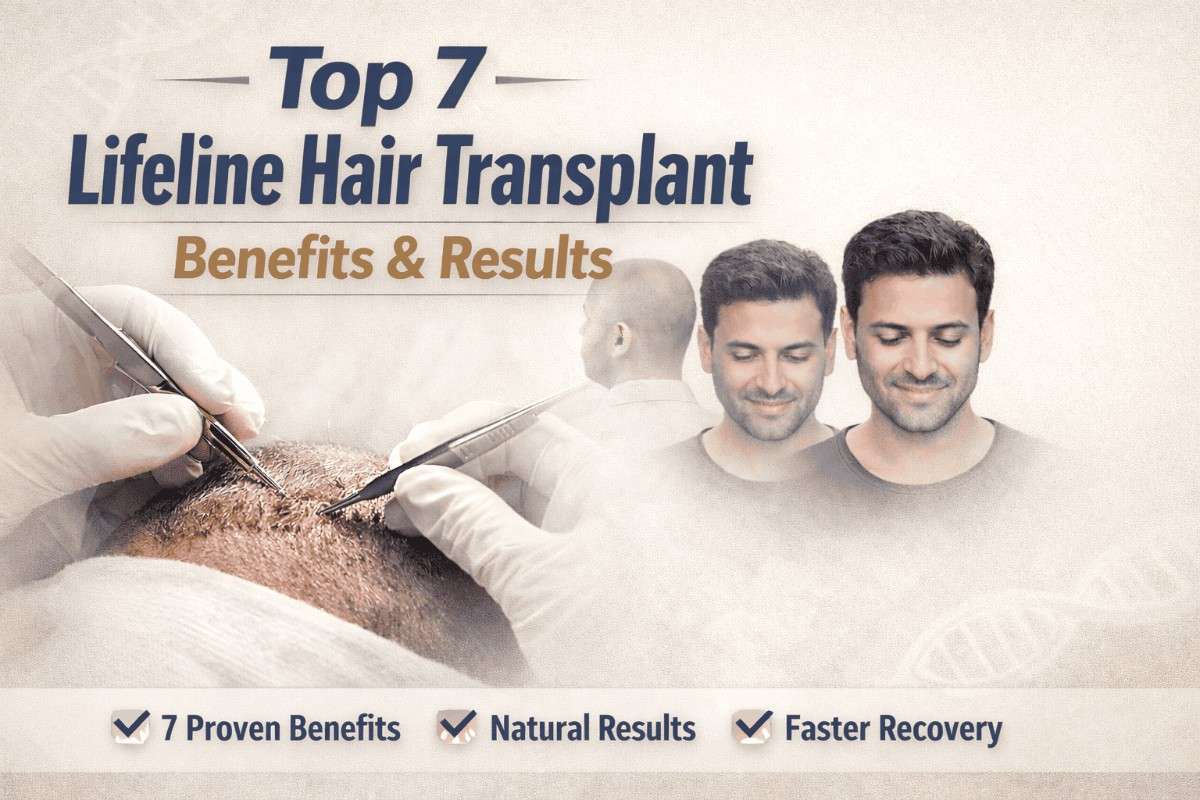
Lifeline Follicular Transplantation: The New Follicular Hair Restoration Procedure.
April 9, 2026
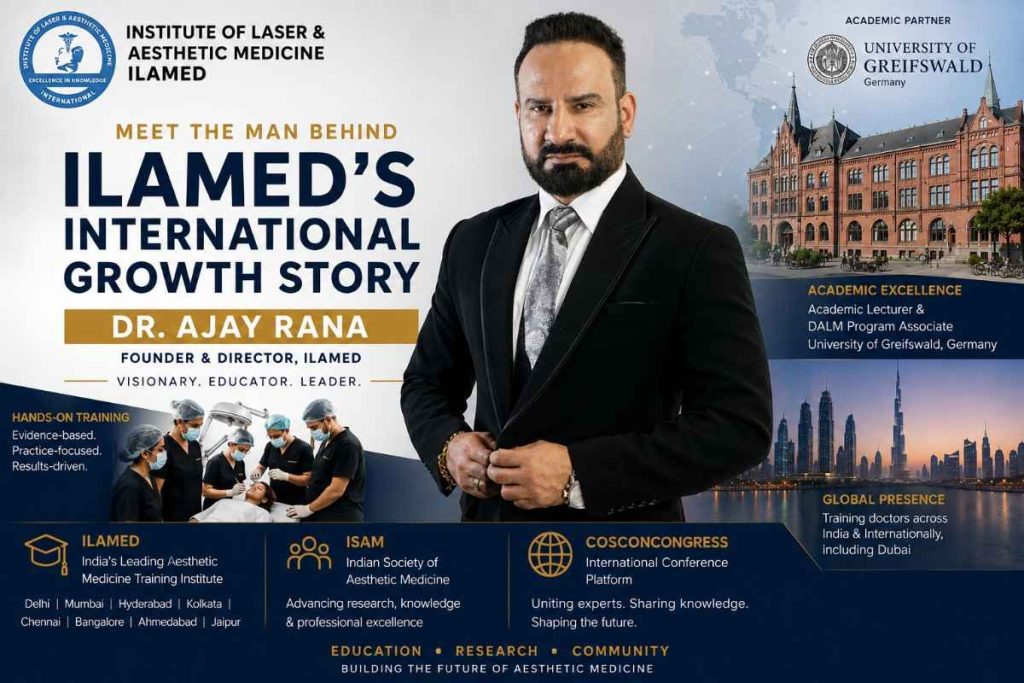
When people talk about aesthetic medicine education in India today, one name comes up almost immediately: Dr. Ajay Rana. As the Founder & Director of the Institute of Laser & Aesthetic Medicine (ILAMED), he has spent over two decades shaping how doctors and cosmetologists across the country — and increasingly, across the world — learn the science and art of aesthetic medicine.
But ILAMED’s story isn’t just about a training institute. It’s about how one dermatologist’s vision turned a single Delhi-based academy into an internationally recognized name, with a footprint that now extends to Dubai and academic partnerships across Europe. This is the story of how it happened — and why it matters for the future of aesthetic medicine in India.
The Early Years: A Dermatologist Who Saw a Gap
Dr. Ajay Rana journey began as a practicing dermatologist, treating patients through his own cosmetic and dermatology clinics in Delhi. Like many doctors of his generation, he trained in traditional dermatology before the aesthetic medicine boom reshaped the specialty worldwide.
What set him apart wasn’t just clinical skill — it was an early recognition of a structural problem in Indian healthcare education. India had no shortage of talented, motivated doctors. What it lacked was structured, standardized, hands-on training in laser and aesthetic procedures. At the time, doctors interested in this emerging field had few reliable options: informal workshops, scattered international courses, or learning purely through trial and error in their own clinics.
Dr. Ajay Rana saw this gap not as a limitation, but as an opportunity to build something that didn’t yet exist in India.
Founding ILAMED: Building From the Ground Up
That observation led to the founding of the Institute of Laser & Aesthetic Medicine (ILAMED) in 2003 — an institute built specifically to close the training gap he had identified. What started as small, hands-on courses for a modest group of physicians has since grown into one of the most recognized aesthetic medicine training platforms in South Asia.
The early years weren’t easy. Building credibility in a new medical subspecialty meant convincing doctors — often skeptical of “non-traditional” training routes — that structured aesthetic medicine education was both legitimate and necessary. Dr. Ajay Rana’s approach was to lead with rigor: evidence-based curricula, hands-on clinical practice, and faculty drawn from real clinical experience rather than purely academic backgrounds.
That reputation for rigor is what allowed ILAMED to expand steadily rather than chase rapid, unsustainable growth. Today, ILAMED runs regular training batches across Delhi, Mumbai, Hyderabad, Kolkata, Chennai, Bangalore, Ahmedabad, and Jaipur, with thousands of doctors and cosmetologists having passed through its programs over the years.
Taking ILAMED Global: The Germany Connection
What sets Dr. Ajay Rana apart from many educators in this space is his focus on international academic credibility, not just domestic reach.
He established a strong working relationship with the University of Greifswald in Germany, one of Europe’s oldest universities, where he holds an academic lecturing role connected to the Diploma in Aesthetic and Laser Medicine (DALM) program. This is currently recognized as the only university-based diploma of its kind offered for the English-speaking world in aesthetic laser medicine — a significant academic distinction that few training providers globally can claim.
This partnership wasn’t just a credentialing exercise. It became the blueprint for ILAMED’s entire international expansion strategy: build credibility through academic rigor first, then scale geographically. Rather than opening international centers purely for commercial growth, Dr. Ajay Rana anchored ILAMED’s global ambitions in genuine academic partnership — a slower but far more durable approach to building trust across borders.
Expanding to Dubai and Beyond
That academic-first approach has since translated into real geographic expansion. ILAMED’s training footprint now extends into international markets, including Dubai, reflecting the growing global demand for standardized, medically sound aesthetic training — particularly across the Middle East, where the aesthetic medicine industry has seen explosive growth in recent years.
For doctors in the Gulf region, ILAMED’s Dubai presence offers something that was previously hard to access locally: training rooted in the same rigorous, university-affiliated standards that Dr. Ajay Rana built in India, without needing to travel to Europe or North America for credible aesthetic medicine education.
Building an Ecosystem, Not Just an Institute
Dr. Ajay Rana’s international vision goes beyond ILAMED alone. In 2018, he founded the Indian Society of Aesthetic Medicine (ISAM), creating a dedicated professional platform for aesthetic medicine specialists to research, exchange clinical knowledge, and connect with peers globally. ISAM has since become a recognized voice for the specialty within India, advocating for standardization and evidence-based practice.
This later grew into CosconCongress, an international conference platform bringing together practitioners, researchers, and educators from across the aesthetic medicine world for knowledge-sharing, live demonstrations, and clinical discussion.
Together, ILAMED, ISAM, and CosconCongress form an interconnected ecosystem — one focused on education, research, and professional community — that has positioned Dr. Ajay Rana as a recognized figure in global aesthetic medicine circles, not just within India. Few individuals in this space have built out all three pillars — training institute, professional society, and international congress — under one cohesive vision.
A Philosophy Rooted in Standards, Not Shortcuts
Ask anyone familiar with ILAMED’s curriculum, and one theme comes up repeatedly: an insistence on doing things properly. In a field where quick-certification courses are common and quality can vary widely, Dr. Ajay Rana has consistently positioned ILAMED around structured, hands-on, evidence-based training rather than fast-track certificates.
This philosophy extends to faculty selection, course design, and the ongoing academic collaboration with Greifswald — all built around the idea that aesthetic medicine, because it directly affects patient safety and outcomes, deserves the same educational seriousness as any other medical specialty.
Why This Matters for the Future of Aesthetic Medicine in India
As aesthetic medicine continues to grow as a specialty in India and globally, the credibility of training institutions matters more than ever — both for the doctors being trained and, ultimately, for the patients they treat. Dr. Ajay Rana’s emphasis on international academic partnerships, structured curricula, and continuous research collaboration has helped set a benchmark for what serious aesthetic medicine education should look like in India.
His work reflects a simple but powerful idea: that world-class training doesn’t have to come from abroad — it can be built at home, refined through international academic partnership, and then taken back out to the world.